The Return of Private Practice: Why the Future Belongs to Independent Veterinary Owners
For years, the dominant narrative in veterinary medicine has been clear: consolidation is inevitable, scale requires corporate backing, and independent ownership is fading.
But that narrative is breaking.
As outlined by Simmons & Associates in their analysis of private practice ownership, the fundamental advantages of ownership—equity growth, autonomy, and long-term financial control—have not changed. What has changed is how ownership is executed.
A new class of independent practices is emerging. And they are not just surviving—they are outperforming.
Ownership Was Never the Problem. Stagnation Was.
According to Simmons & Associates, practice ownership has historically provided veterinarians with the ability to build wealth, control clinical standards, and create long-term enterprise value. Those fundamentals remain intact today.
What failed was not ownership—it was execution.
Many legacy private practices lost ground because they lacked:
- Operational systems
- Performance accountability
- Scalable infrastructure
- Strategic branding
Corporate groups didn’t outcompete independents by practicing better medicine. They outcompeted them by building better systems.
The New Independent Model: Systemized, Not Scrambling
Modern independent practices are no longer personality-driven clinics trying to keep pace.
They are structured organizations.
The shift is subtle but critical:
- From reactive workflows to standardized processes
- From intuition-based decisions to data-driven management
- From passive branding to intentional positioning
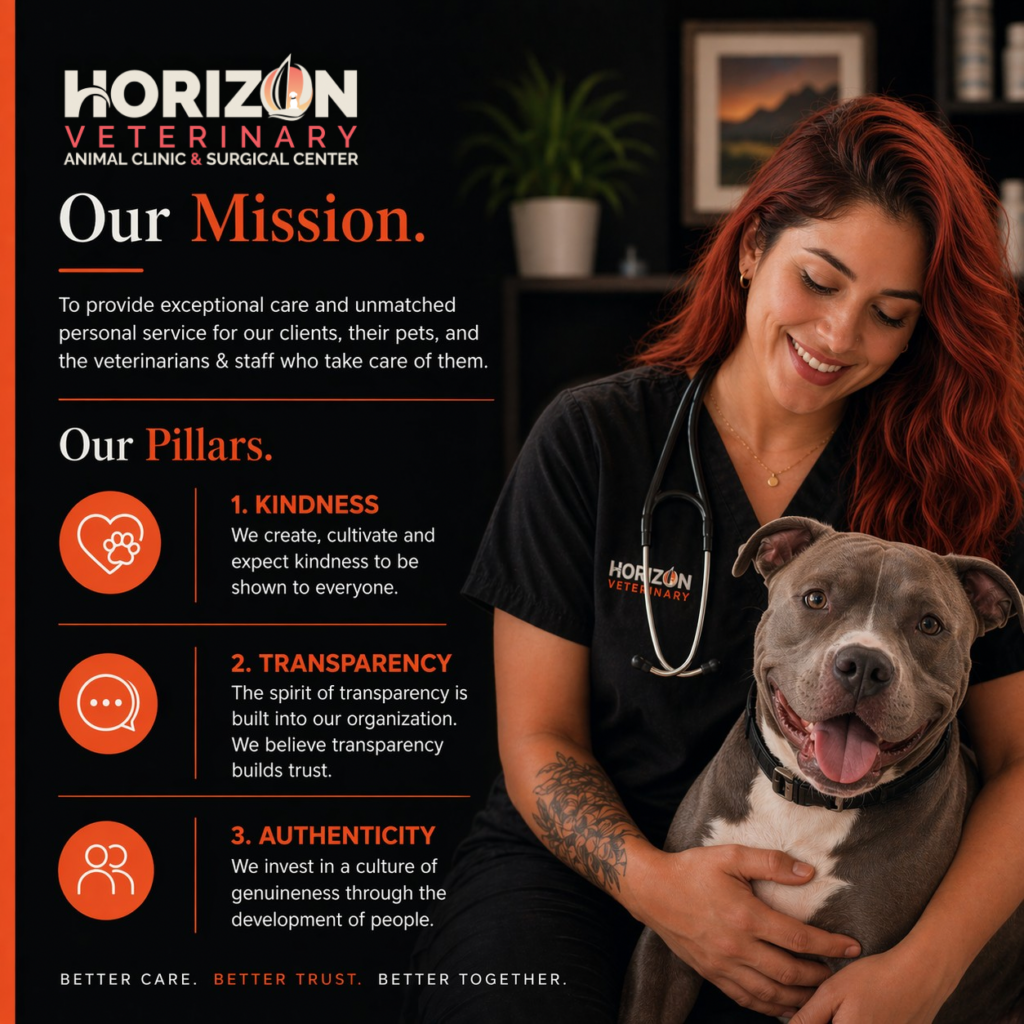
Practices like Horizon Veterinary reflect this evolution. Built under the leadership of Aaron Rainer, DVM, MPH, Past President of the Texas Veterinary Medical Association and a Rising Star Award recipient from the Texas A&M College of Veterinary Medicine and Biomedical Sciences—ranked among the top five veterinary programs globally—Horizon represents an emerging model where ownership is paired with disciplined execution, not just clinical excellence.
This is not the traditional “small practice” model.
This is independent ownership, upgraded.
Accessibility Is the Competitive Advantage Corporations Missed
Corporate consolidation introduced efficiency, but often at the cost of accessibility.
Clients today are making decisions based on:
- Speed of access to care
- Transparency in communication
- Flexibility in payment
- Trust in the provider relationship
These are not fringe preferences. They are primary decision drivers.
The Accessible Care Clinic model—implemented in practices like Horizon—directly addresses these demands:
- After-hours urgent care reduces unnecessary emergency visits
- Payment plan structures expand access to treatment
- Open-concept care environments improve transparency and trust
- Technology enhances, rather than replaces, the veterinarian-client relationship
This aligns with the broader ownership philosophy described by Simmons & Associates: practices that adapt to client expectations while maintaining operational control are the ones that retain long-term value.
Leadership Is the True Differentiator
Most discussions about ownership focus on structure: buying a practice, financing, valuation.
That’s surface level.
The real variable is leadership.
Entrepreneurial operators like Aaron Rainer introduce dynamics that institutional models struggle to replicate:
- Rapid decision-making without bureaucratic delay
- Direct accountability at the ownership level
- Alignment between mission, operations, and outcomes
- Willingness to challenge outdated industry norms
Ownership without leadership creates inefficiency.
Leadership without ownership creates limitation.
The advantage comes from combining both.
The Financial Reality: Ownership Still Outperforms
The economic case for ownership remains intact—and is still emphasized by Simmons & Associates in their advisory work.
Key advantages include:
- Retained earnings rather than corporate distribution
- Equity appreciation over time
- Control over exit strategy and valuation
But modern independent practices are adding a new dimension:
They are not just building clinics.
They are building scalable systems.
That distinction changes everything.
From Clinic to Platform
The next phase of independent veterinary medicine is not single-location ownership.
It is platform development.
This includes:
- Standardized operating procedures
- Replicable care delivery models
- Integrated financial access systems
- Structured mentorship pipelines
Initiatives like Horizon Waypoint illustrate how independent practices can extend beyond a single location and begin building a network—without sacrificing independence.
This is how independents compete with corporations without becoming them.
The Bottom Line
Private practice is not disappearing.
Poorly executed private practice is.
What is replacing it is a more disciplined, more scalable, and more intentional version of ownership—one that aligns with the foundational principles long supported by Simmons & Associates while advancing them through modern leadership.
The next generation of veterinary success will not belong to those who sell.
It will belong to those who build.
And more importantly, those who build it right.