🩺 Who’s Protecting Veterinary Medicine?
Why Corporate Control Has Quietly Undermined the Integrity of Animal Care
Editorial Note: This is an opinion article, and the perspectives shared reflect Dr. Aaron Rainer’s professional experience. They are not directed at any specific company, clinic, or individual, but exist to advocate for ethics, transparency, and accountability in our field. These views are not grounds for defamation claims, retaliation, or litigation, and should not be misconstrued as such. Any attempt to suppress open dialogue only underscores how urgently this conversation is needed.
The Breaking Point
Ask any old-school veterinarian what their practice used to feel like, and you’ll hear the same story.
A small clinic off a county road. A phone that rang off the hook. A doctor who knew every dog by name and every client by the sound of their boots coming through the door.
That was veterinary medicine before the buyouts; before Wall Street and private equity discovered that caring for animals could turn a profit large enough to justify a spreadsheet full of clinics.
“Who can blame those clinic owners for selling?” I’ve asked myself more times than I can count.
They were tired, under-supported, and surrounded by a system that made independent ownership harder every year.
The offers looked like a way out: retirement, relief, maybe even validation. Until the same deals stripped away the very soul of the profession.
When medicine becomes management and compassion turns into quotas, everyone loses…doctors, staff, and clients alike.
🔑 Key Takeaways
- Corporate ownership has quietly overridden medical judgment in veterinary care, shifting decision-making from doctors to investors, a structure that would be illegal in human or dental medicine.
- Unlike dentistry, veterinary medicine lost its guardrails. Non-veterinarians now influence pricing, protocols, and doctor pay, despite Texas law reserving medical authority strictly for licensed veterinarians.
- Corporate control rewards volume, not ethics, contributing to burnout, loss of mentorship, and a mental health crisis among veterinarians, while reducing transparency for pet owners.
- Regulatory capture and weak enforcement allowed this system to grow unchecked. State boards and associations became influenced by the very corporations they were meant to regulate.
- The result is a transparency gap for pet owners. Most clients have no idea who actually owns their clinic or who controls their veterinarian’s medical decisions.
- This is not anti-business! It is pro-ethics. Medicine must be governed by compassion and professional judgment, not quotas, spreadsheets, or investor expectations.
- The solution is enforcement and transparency, not new laws. Texas already prohibits corporate control of medical decisions, the statute simply needs to be upheld.
- Horizon Veterinary stands for local ownership, medical independence, and client trust, ensuring decisions are made by the doctor in the room — not a boardroom in another state.
The Bigger Picture
In human and dental medicine, there’s a firewall between investors and patients.
Most states have corporate-practice laws that forbid non-doctors from making medical decisions.
A Dental Support Organization can handle payroll and HR, but it can’t tell a dentist how to treat a patient, what to charge, or what to recommend.
In dentistry, business supports medicine. It doesn’t own it.
Veterinary medicine was once protected the same way.
But over time, that firewall eroded…quietly, steadily, almost politely.
How Dentistry Kept Its Guardrails
In a dental clinic, the dentist still calls the shots.
Compensation is transparent: a base salary plus 25–35 percent of the doctor’s own production, or sometimes a collections-based model that rewards efficiency without punishing ethics.
The numbers may fluctuate, but the principle hasn’t changed in decades, the licensed dentist controls care, not the management company.
There’s even a legal safeguard:
If a non-dentist tries to control pricing or treatment recommendations, it violates state law.
That’s how dentistry maintains its ethical firewall: business can support medicine, but never override it.
Veterinary medicine, by contrast, copied the DSO model in name only, then removed the guardrails that made it ethical.
The Veterinary Reality
Across the country, corporations now:
- Hire and fire veterinarians directly, despite lacking medical licenses.
- Set prices and treatment protocols.
- Tie doctor pay to quotas, upselling metrics, and compliance scores.
- Restrict doctor-client communication when it conflicts with “corporate messaging.”
It’s not medicine anymore; it’s management science wrapped in empathy branding.
These practices shift control of patient care from the exam room to the boardroom, exactly what the law was written to prevent.
The Monsters We Made
In chasing faster pay and easier exits, the profession created a new kind of instability.
Corporations inflated salaries to lure new graduates, then tied those salaries to unrealistic production targets. Now, fresh veterinarians enter a system that rewards volume over mentorship and burnout over balance, and this contributes to the suicide rate and mental health crisis the profession professes.
It’s not their fault.
They were raised in a structure that measures worth by output, not by wisdom.
But the consequence is a profession divided, older veterinarians who feel replaced, and younger ones who feel exploited.
Somewhere between idealism and economics, the heart of veterinary medicine has been priced out of its own story, many of them by people who’ve never even stepped foot into a veterinary clinic.
How It Slipped Through
The answer lies in something political scientists call regulatory capture, when the watchdog starts eating out of the same bowl as the one it’s supposed to guard.
Over the years, state boards and professional associations filled with members tied to corporate employers. Regulators benefit from the same system they’re meant to oversee.
Corporate veterinarians shape the very policies that define their own accountability.
In Texas, that capture runs deep. The Governor appoints members of the Texas Board of Veterinary Medical Examiners (TBVME), often based on association recommendations already influenced by corporate interests.
What looks like routine governance quietly becomes a system where corporations help enforce the very laws meant to restrain them.
Over A Decade of Disarray
For over ten years, the TBVME has been in slow motion chaos:
leadership turnover, investigation backlogs, and public mistrust.
Ownership laws go unenforced, complaints languish, and transparency remains optional.
This isn’t random dysfunction.
It’s what happens when corporate influence meets political indifference.
Why It Should Matter to Every Pet Owner
When corporations control medicine:
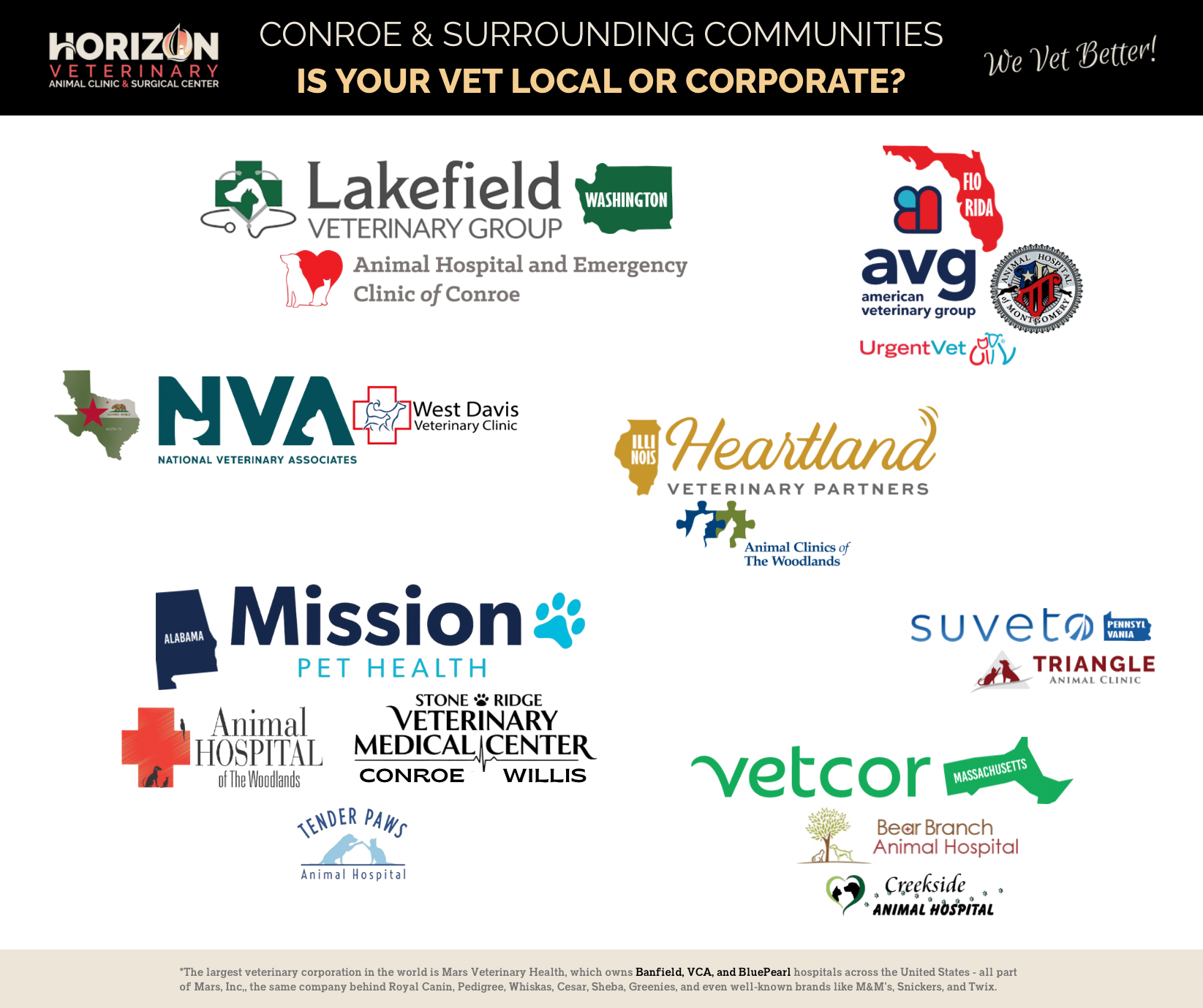
- Clients lose transparency about who truly owns their clinic.
- Veterinarians lose professional independence.
- Animals lose advocates free to make medical decisions.
This isn’t an anti-business argument! It’s a pro-ethics one.
Medicine, whether human, dental, or veterinary should be governed by compassion, not quarterly reports.
The Transparency Gap
Even in dentistry, disclosure is imperfect. A “Dr. Smith, DDS” sign doesn’t tell you who owns the management company behind it. But at least dental boards can investigate; at least ownership structures must be filed somewhere.
In veterinary medicine, not even that exists. Most clinics hide behind neutral trade names or the name that came with the clinic that earned trust for decades. Management contracts aren’t public.
Boards often don’t know who really owns the hospitals they regulate.
Without disclosure, clients can’t make informed choices; and boards can’t enforce the law.
The Path Forward
Texas doesn’t need new laws.
It needs courage and enforcement.
Boards must be conflict-free.
Corporate affiliations must be public.
Governors and legislators must understand the stakes.
And only licensed veterinarians should ever set prices or medical protocols.
Transparency isn’t anti-corporate!
It’s pro-trust.
And trust is the foundation of every healing profession.
Horizon Veterinary’s Perspective
At Horizon Veterinary, we built our practice on that trust: one patient, one family, one community at a time. We believe transparency, accountability, and local ownership protect both pets and people.
Our mission is simple:
Keep medicine where it belongs, in the hands of doctors who live in the communities they serve.
When veterinary care is guided by compassion instead of corporations, everyone wins:
the patient, the client, and the profession itself.
The Legal Line | How It’s Crossed
“Crossing that line isn’t a business issue it’s a public-trust violation. Texas law is crystal clear: only licensed veterinarians can control medical decisions. But in reality? Non-veterinarians are calling the shots, profiting from care, and twisting the rules into legal pretzels while enforcement looks the other way. The law exists. The courage to enforce it doesn’t.”
— Dr. Aaron Rainer, DVM
Ready to Make Horizon Veterinary | Animal Clinic & Surgical Center Your New Vet?
Whether you’ve been a longtime patient of Dr. Rainer or are looking for a new trusted veterinarian nearby, we welcome you and your pets with open arms and NO CORPORATE NONSENSE!
📞 Call us today at (936) 444-4850 or schedule your appointment online at myhorizonvet.com.