Is Your Dog Choking by the Stove? Essential Tips for Pet Safety
Every pet owner wants to keep their furry friends safe. Being aware of potential choking hazards in the kitchen, especially around the stove, is crucial for every dog owner. Cooking can create many distractions, but it’s important to stay vigilant to protect pets from accidents.
Many dogs explore their environment with curiosity. This includes getting too close to the stove, where they might choke on food scraps or other dangerous items. Recognizing the signs of choking and knowing how to react can make a life-saving difference. Pet safety should always be a top priority. Taking simple steps to create a safer cooking space can prevent choking incidents and ensure a happy, healthy home for pets.
Key Takeaways
- Knowing how to identify choking signs is essential for dog owners.
- Keeping cooking areas clear of hazards helps prevent emergencies.
- Quick action can save a dog’s life in a choking situation.
Understanding Canine Choking Emergencies
Choking emergencies in dogs can happen quickly. Recognizing the signs and knowing what to do can save a pet’s life. Dog owners must be prepared and informed.
Recognizing the Signs of Choking
It is important to spot the signs of choking. A dog may show different behaviors when choking. Common signs include:
- Gagging or coughing: Attempting to clear the throat.
- Pawing at the mouth: Trying to remove the obstruction.
- Difficulty breathing: Signs like wheezing or unusual sounds.
- Panic or restlessness: The dog may appear anxious.
- Loss of consciousness: This can happen if the airway is completely blocked.
If a dog shows any of these behaviors, it is crucial to act quickly.
Immediate Actions to Take During a Choking Emergency
When a dog is choking, quick action is key. Here are steps to take:
- Stay calm: Your calmness can help your dog feel less anxious.
- Assess the situation: Determine if the dog is truly choking.
- Look into the mouth: If possible, check if you can see the object.
- Don’t stick your fingers blindly: This can push the object further down.
If the dog is still choking and unable to breathe, be ready to perform the Heimlich maneuver.
Administering the Heimlich Maneuver and CPR
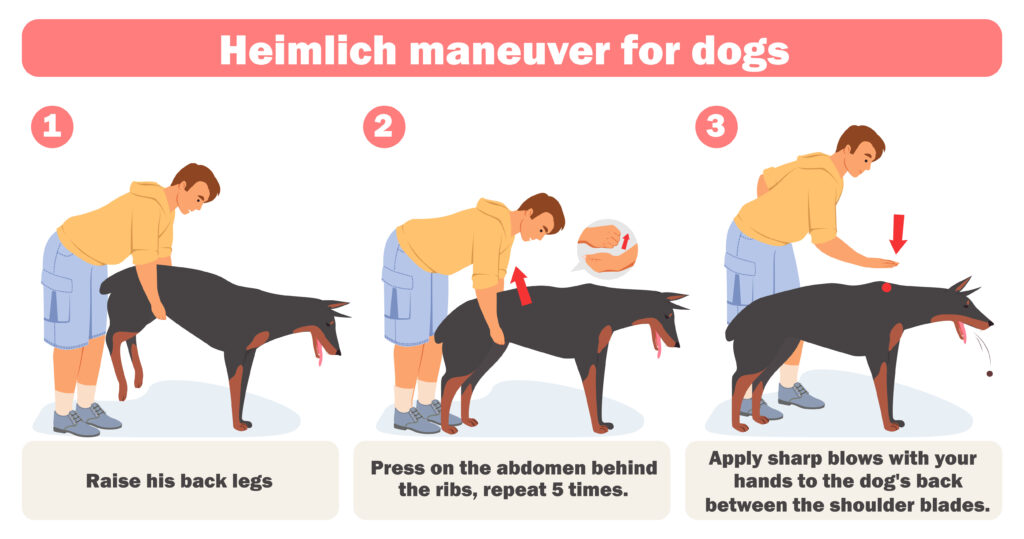
If a dog is choking and not breathing, the Heimlich maneuver may be necessary. Here’s how to do it:
- For small dogs: Hold the dog on your lap. Use your hands to make a fist just below the rib cage. Apply quick, inward thrusts.
- For large dogs: Stand behind the dog. Place your arms around it. Make a fist and thrust inward and slightly upward under the ribs.
If the dog loses consciousness, CPR may be needed:
- Check for breathing: If the dog does not breathe, begin CPR.
- Position the dog: Lay it on its side.
- Perform chest compressions: Use both hands to compress the chest about 30 times.
- Give breaths: After compressions, give two rescue breaths.
These actions can help save a dog’s life during a choking emergency.
Preventing Choking Hazards in Dogs
Choking can be a serious concern for dog owners. It is vital to know how to keep pets safe from choking risks at home. Here are some important ways to create a safer environment for dogs.
Safe Toys and Chews for Aggressive Chewers
Choosing the right toys can help prevent choking. For aggressive chewers, durable toys made of rubber or nylon are best. Look for products labeled as “indestructible” or “heavy-duty.”
Avoid small, easily broken toys, as these can create choking hazards. Dogs often bite off pieces and swallow them. Always supervise playtime, especially with new toys, to ensure safety.
Recommended Safe Toys:
- Rubber balls
- Rope toys
- Nylon bones
Checking toys regularly for wear and tear is also important. Discard any toys with loose parts, cracks, or damage. This simple step can keep dogs from choking on broken toy pieces.
Dog-Proofing Your Home to Prevent Choking Risks
A dog-proof home is essential for safety. Start by keeping small objects out of reach. Items like coins, batteries, and rubber bands are common choking hazards.
Additionally, secure trash cans with lids. Dogs can be curious and may dig through them, risking choking on food scraps or wrappers.
Place pet gates to limit access to certain areas, like the kitchen. Keeping floors clutter-free will also help reduce risks. Regularly inspect the home for objects that dogs might chew or swallow.
Taking Precautionary Measures Against Choking Hazards
It is important to recognize the signs of choking. Excessive drooling and gagging can indicate a problem. If a dog shows these signs, check their mouth for any obstructions.
Feeding dogs in a calm environment can also help. Dogs that eat too quickly may be more prone to choking on food. Using puzzle feeders or slow-feed bowls can encourage slower eating.
Training dogs to drop objects on command can be invaluable. Teaching this command helps ensure that dogs don’t ingest dangerous items they may find during play. Being proactive about safety can significantly reduce choking hazards at home.